Maurizio Galimberti was born in Como in 1956. He lives and works in Milan. Considered the greatest exponent of Italian instant photography, he has been nominated the official Instant Artist of Fuji Italy. After a traditional approach to photography, in 1983 he was enchanted by the expressive possibilities of the Polaroid, an instrument that allowed him to play with his usual passion: the historical avant-garde; becoming his radical and ongoing focus. In 1991 he became the official testimonial of Polaroid Italia and in 1992 he received the prestigious Grand Prix Kodak Pubblicità Italia award.

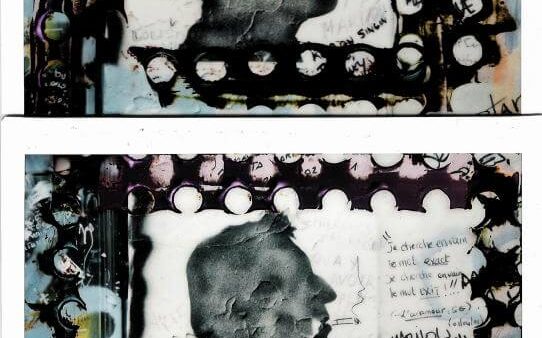
From 1989 his research on polaroid continued, the portrait of his son was his first experiment, using the technique of the “Photographic Mosaic”. He began to extend his techniques, which he called “butterfly wings” and “cluster” to different portraits of famous people, such as Johnny Depp, Robert De Niro, Lady Gaga, Umberto Eco, Robert Altman. He also won the cover of Times Magazine, with Depp’s portrait.
From 1989 his research on polaroid continued, the portrait of his son was his first experiment, using the technique of the “Photographic Mosaic”. He began to extend his techniques, which he called “butterfly wings” and “cluster” to different portraits of famous people, such as Johnny Depp, Robert De Niro, Lady Gaga, Umberto Eco, Robert Altman. He also won the cover of Times Magazine, with Depp’s portrait.
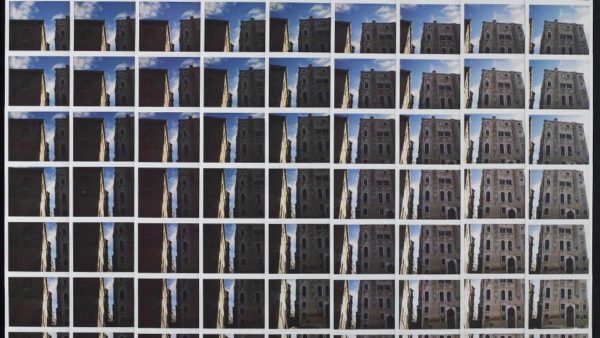
The “mosaic” soon evolved from portraits to landscapes, architecture and cities. His artistic contaminations, inspired by Mondrian and Duchamp, resulted in acknowledgements by art critics and galleries, for his works on architecture, in Paesaggio Italia, Viaggio in Italia and in Viaggio in Emilia. The assembly of polaroids taken in urban situations recalled the musical composition, its succession – its rhythm. The composer Nicola Piovani said that Galimberti’s works reminded him of music scores.
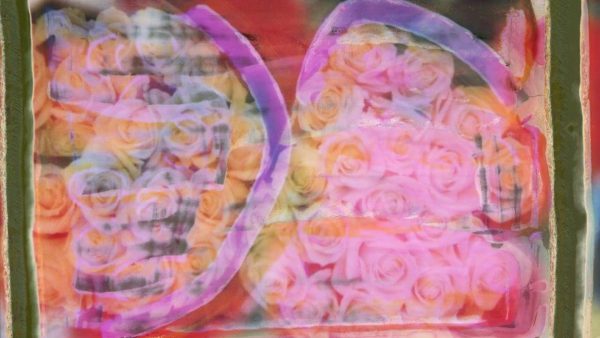
The use of the Polaroid, which has become an exceptional artistic medium in his hands, has earned him the nickname of Instant Artist, as Denise Aliprandi, Polaroid’s communication manager named him. Maurizio Galimberti continuously experiments, tuning his expressive potential with those of his instrument. So he passes from the geometric spectacularization of places and faces, to the search for intimacy in its subjects. Reality is always filtered by his vision, with a 360 degree Cubist perspective. Galimberti plays with reality, filters and distorts it to tell various planes of truth, through his images. The building becomes a “multi-palace” and the landscape becomes a “multi-landscape”, a face or body multiplied to get closer to the “real” aspect, like a large skyscraper becomes multifaceted in its multiple photographic representations.
Galimberti has established himself as one of the most famous Italian photographers on the international scene. His authorial poetics are immediately recognizable, making the polaroid a vehicle for the artistic image sublimation.